







Fiberglass (FRP) Cable Tray: Structural Features and Installation Guidelines
2025-04-03
Introduction
As technology advances, modern infrastructure increasingly relies on composite materials to meet demands for durability, safety, and efficiency. Among these innovations, fiberglass reinforced plastic (FRP) Cable Trayshave emerged as a superior alternative to traditional metal trays in electrical and communication systems. Combining strength, corrosion resistance, and design flexibility, Frp Cable trays are revolutionizing cable management in industries ranging from power distribution to urban network construction. This essay examines the structural advantages of FRP cable trays, their applications, and critical installation practices.
Advantages of FRP Cable Trays
1. Enhanced Safety and Durability:
Frp Trays excel in protecting cables due to their inherent insulation properties, eliminating electrical conductivity risks. Their non-metallic composition resists corrosion from chemicals, moisture, and UV exposure, ensuring longevity even in harsh environments like coastal or industrial zones (NACE International, 2020). Qiong Kai’s FRP trays, crafted from premium unsaturated polyester resin and glass fiber, demonstrate exceptional flame retardancy and emit no toxic fumes during fires, enhancing workplace safety.
2. Mechanical Resilience:
The composite structure provides high impact resistance, preventing deformation under heavy loads. Unlike steel trays, FRP maintains structural integrity in temperatures ranging from -50°C to 120°C, making it ideal for extreme climates (Zhang et al., 2019).
3. Installation Efficiency:
Lightweight yet robust (30% lighter than steel), FRP trays simplify transportation and installation. Their modular design allows on-site customization, reducing labor costs. Ventilation slots enable rapid heat dissipation, preventing cable overheating in densely packed systems.
Applications
FRP cable trays are versatile, suitable for:
- Power Systems: Supporting high-voltage cables in substations.
- Industrial Facilities: Resisting chemical corrosion in petrochemical plants.
- Urban Infrastructure: Deploying in tunnels, cable trenches, and overhead installations.
- Telecommunications: Organizing fiber optic networks in data centers.
Structural Features
FRP trays integrate multiple functional advantages:
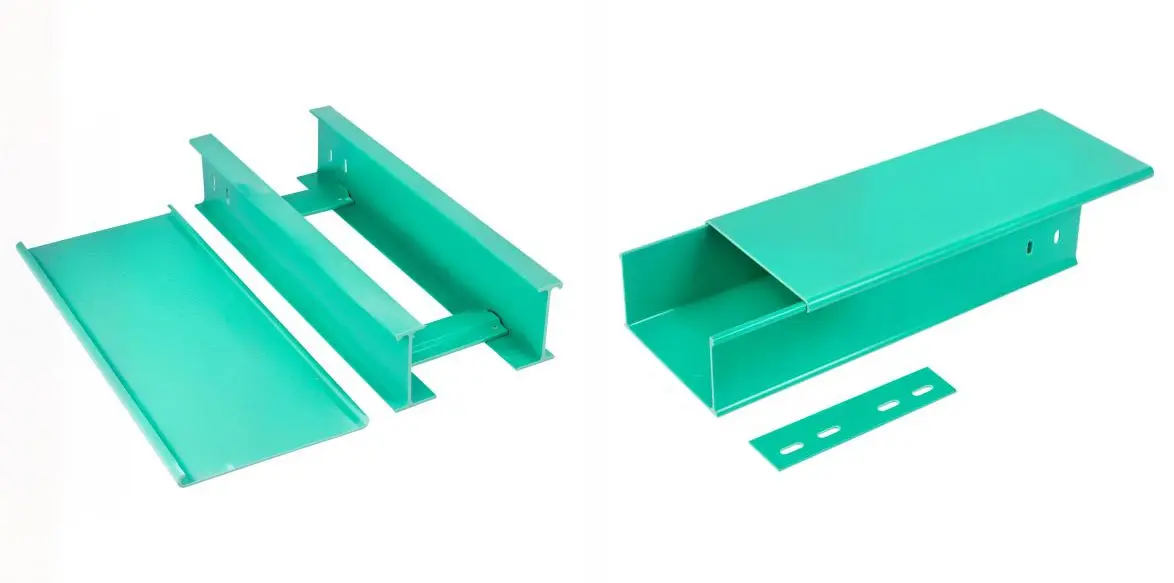
- Optimized Load-Bearing: Reinforced ribs and flanges enhance rigidity while minimizing weight.
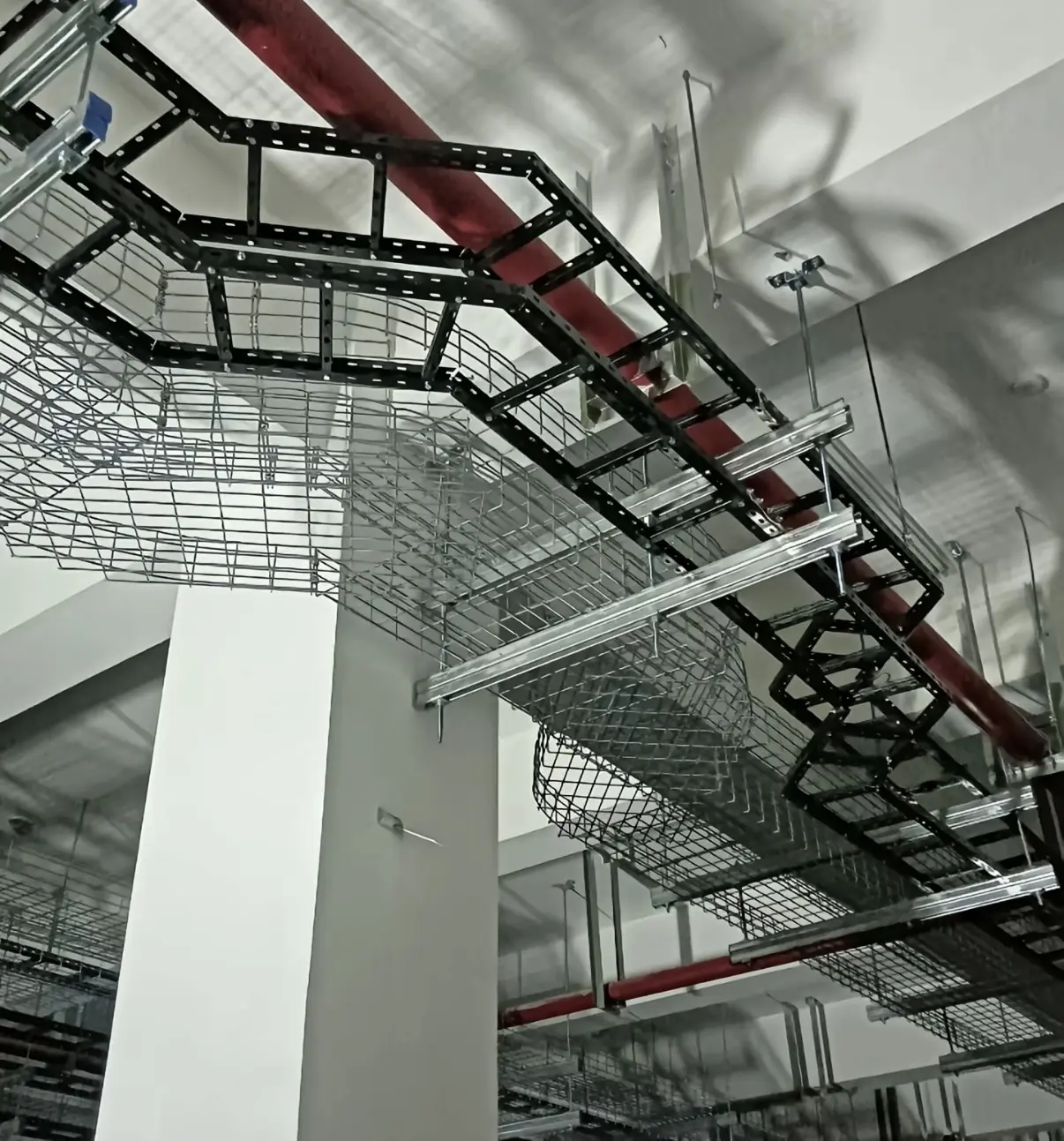
- Adaptive Design: Trays can be installed vertically, horizontally, or diagonally on walls, columns, or suspended from ceilings. For multi-tiered setups, I-beam supports ensure balanced weight distribution.
- Aesthetic Integration: Smooth surfaces and neutral colors blend seamlessly into architectural environments.
Installation Guidelines
1. Protective Measures:
- Protective covers can prevent accidental damage.
- Add covers in high-traffic areas prone to mechanical impacts.
2. Support Spacing:
- Horizontal spans: Use load-bearing curves to determine optimal support intervals.
- Vertical spans: Secure trays with brackets every 1–2 meters for stability (IEEE 3001.5-2021).
3. Cable Transition Protection:
- Use guide plates at bends or vertical drops to shield cables from abrasion.
4. Safety Protocols:
- Never use trays as walkways or platforms.
- Conclusion
- Galvanized C-channel steel revolutionizes seismic bracing systems through its optimal strength-to-weight ratio, corrosion resistance, and design adaptability. As urbanization drives demand for earthquake-resistant infrastructure, this material will remain pivotal in constructing safer and more sustainable buildings.
- References
- 1. Smith, J., & Carter, R. (2020). *Cold-Formed Steel Design*. Wiley.
- 2. ASCE/SEI 7-16. (2016). *Minimum Design Loads for Buildings and Other Structures*. American Society of Civil Engineers.
- 3. American Galvanizers Association. (2019). *Galvanizing for Corrosion Protection*.
- 4. Brown, T. (2021). "Modular Design in Seismic Systems." *Journal of Structural Engineering*, 45(3), 112–120.
- 5. Jones, L., et al. (2018). "Material Efficiency in Steel Construction." *Construction Materials Journal*, 33(4), 78–85.