| Product Specification |
Base material |
Cold-formed galvanized steel; common product standards include ASTM A1003/A1003M and EN 14195, with material requirements commonly linked to EN 10346 or equivalent standards. |
Request the governing standard, steel grade, yield strength, coating designation, and test documentation in the quotation. |
| Product Specification |
Common stud thickness |
Approximately 0.50–1.20 mm for many non-load-bearing interior systems; heavier structural applications may require thicker gauges based on engineering calculations. |
Do not compare quotations by thickness alone; compare effective section properties, design load, deflection limits, and tested assembly performance. |
| Product Specification |
Typical section sizes |
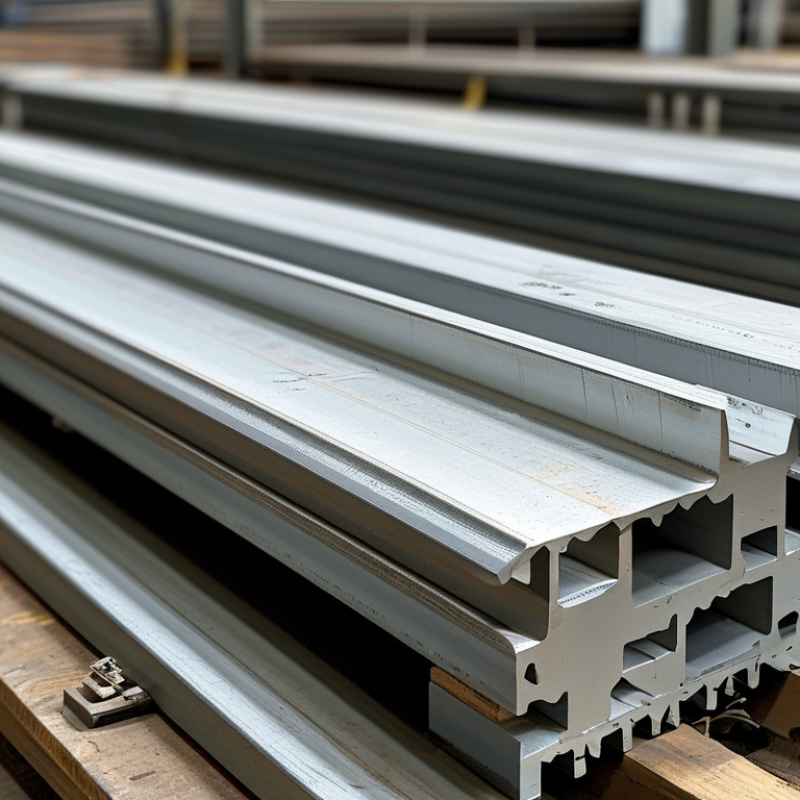
Common nominal widths include approximately 50, 70, 75, 90, 100, stud? and 150 mm; exact dimensions vary by regional framing system. Typical flange widths are about 35–50 mm. |
Provide a dimensioned drawing rather than relying on nominal size terminology, which differs between markets. |
| Product Specification |
Track slot function |
Slotted or deflection tracks typically use elongated openings to accommodate controlled vertical movement between a partition and the supporting structure. Slot geometry is system-specific. |
Approve slot length, pitch, edge distance, and permissible movement with the project engineer before production. |
| Product Specification |
Steel density and weight calculation |
Carbon steel density is approximately 7,850 kg/m³. Finished weight depends on thickness, developed width, perforations, and zinc coating. |
Use net and gross weight separately for landed-cost modeling, container planning, and customs documentation. |
| Corrosion Protection |
Zinc coating |
Common coating designations include approximately 120–275 g/m² total zinc mass for both surfaces, subject to the applicable standard and product application. |
Specify coating mass or thickness explicitly; “galvanized” without a numeric requirement is not sufficient for supplier comparison. |
| Corrosion Protection |
Indoor and high-humidity suitability |
Standard galvanized steel is commonly used for dry interior environments. Coastal, continuously damp, chemically exposed, or exterior conditions may require a higher coating level or alternative protection. |
Match coating selection to the project exposure classification and require written approval for substitutions. |
| Quality Assurance |
Dimensional tolerances |
Control outside dimensions, flange width, lip geometry, slot position, slot pitch, straightness, camber, and cut length according to the approved drawing and applicable standard. |
Include measurable tolerances in the purchase order; avoid acceptance terms such as “standard tolerance” without a referenced standard. |
| Quality Assurance |
Required inspection records |
Recommended records include mill certificates, coating test results, dimensional inspection reports, batch traceability, and packing-list reconciliation. |
Make document submission a pre-shipment requirement and link payment milestones to document approval. |
| Supplier Selection |
Production capability |
Preferred suppliers should demonstrate roll-forming capability, programmable slot punching, automatic length cutting, profile changeover control, and stable batch-to-batch repeatability. |
Ask for process flow, machine capability, sample inspection data, and evidence of production capacity during the required delivery window. |
| Supplier Selection |
Minimum order quantity |
Custom slotted profiles may have minimum orders based on coil utilization, setup time, packaging, and shipping volume. The commercial MOQ must be confirmed for each profile and length. |
Request MOQ by SKU and identify whether mixed profiles, mixed lengths, or trial quantities are permitted. |
| Supplier Selection |
Lead time |
A practical planning range is approximately 2–6 weeks for repeat production after drawing approval, plus international transit and customs clearance. New tooling or first-article approval can extend the schedule. |
Separate tooling, production, port, transit, clearance, and local delivery time in the purchase schedule. |
| Cost Factors |
Raw-material exposure |
Steel coil cost is usually the largest variable cost. The final price also reflects coating mass, slitting yield, scrap, energy, labor, tooling, packing, financing, and logistics. |
Request a validity period and a transparent price-adjustment formula tied to an agreed steel index or documented mill quotation. |
| Cost Factors |
Profile complexity |
Multiple bends, tight tolerances, frequent slot punching, short cut lengths, and many SKU changes generally increase setup time, scrap, and inspection cost. |
Standardize compatible profiles and lengths where possible, while preserving required structural and movement performance. |
| Cost Factors |
Indicative cost structure |
For budgeting, material commonly represents roughly 55–75% of ex-works cost; processing, coating allocation, packaging, overhead, and margin account for the balance. Actual percentages vary by market and order size. |
Use a total-cost model instead of selecting the lowest unit price without considering yield, claims, freight, and installation compatibility. |
| Logistics |
Packing method |
Common export packing includes bundled steel sections, steel or polymer strapping, protective wrapping, SKU labels, and moisture protection appropriate to the transport route. |
Specify bundle quantity, maximum bundle weight, label format, lifting points, and protection against condensation and edge damage. |
| Logistics |
Container utilization |
Light-gauge sections are often limited by cubic volume before reaching the container’s maximum payload. Bundle geometry and length can materially affect utilization. |
Request a loading plan showing bundle dimensions, gross weight, cubic volume, and the number of bundles per shipment. |
| Commercial Terms |
Incoterms and landed cost |
Compare quotations on the same basis, such as EXW, FCA, FOB, CIF, or DAP. Landed cost should include freight, insurance where applicable, duties, customs fees, inland delivery, inspection, and financing. |
Use one standardized RFQ template and calculate all offers to the same delivery point and currency. |
| Commercial Terms |
Payment and currency risk |
Common international structures include an advance payment with balance against shipping documents, documentary credit, or milestone payment subject to inspection. |
Align payment with measurable milestones and define currency, bank charges, document requirements, and remedies for late delivery or nonconformity. |
| Procurement Best Practice |
RFQ package |
A complete RFQ should contain a dimensioned profile drawing, steel grade, thickness, coating, slot geometry, cut length, quantity by SKU, packaging, required standards, inspection plan, delivery term, and destination. |
A complete technical package reduces hidden assumptions, quotation variance, and production rework. |
| Procurement Best Practice |
Sample and first-article approval |
Approve representative samples before mass production, including profile dimensions, slot location, cut length, surface condition, coating, bundle labeling, and fit with mating components. |
Record approved samples and retain them as the visual and dimensional reference for future shipments. |
| Procurement Best Practice |
Pre-shipment inspection |
Inspect a statistically representative sample or an agreed quantity from each production batch. Verify dimensions, slot pattern, quantity, labeling, packing, and documentation. |
Define acceptance criteria, sampling level, nonconformity classification, and re-inspection rules before production begins. |
| Risk Management |
Supplier scorecard |
A balanced scorecard can weight technical compliance at 30%, quality performance at 25%, total landed cost at 20%, delivery reliability at 15%, and service or documentation at 10%. |
Adjust weights to project priorities and evaluate at least two qualified sources for critical profiles. |
| Risk Management |
Common failure risks |
Frequent risks include incorrect slot pitch, mixed bundle labels, thickness substitution, insufficient coating, length variation, transit corrosion, incomplete certificates, and unapproved drawing changes. |
Use controlled drawings, batch traceability, change approval, moisture-resistant packing, and documented corrective-action procedures. |
| Sustainability |
Environmental documentation |
Relevant records may include recycled-content information, energy or emissions data, responsible sourcing declarations, and recycling instructions. Steel is widely recyclable, but project claims require documented evidence. |
State the required environmental documentation in the RFQ and distinguish verified data from supplier estimates. |